
CSU Board of Trustees Approves Pay Raises for More Executives and Discusses Discrimination Investigations
The CSU Board of Trustees failed us again on January 28 after they approved yet another set of raises for top administrators just two months after facing backlash for increasing pay for campus presidents.
Despite some campuses facing cuts to instruction, the trustees gave raises, deferred compensation, and performance bonus eligibility for four vice chancellors. They did this after CFA members urged them to prioritize spending funding on instruction, restoring academic programs, and giving faculty a living wage.
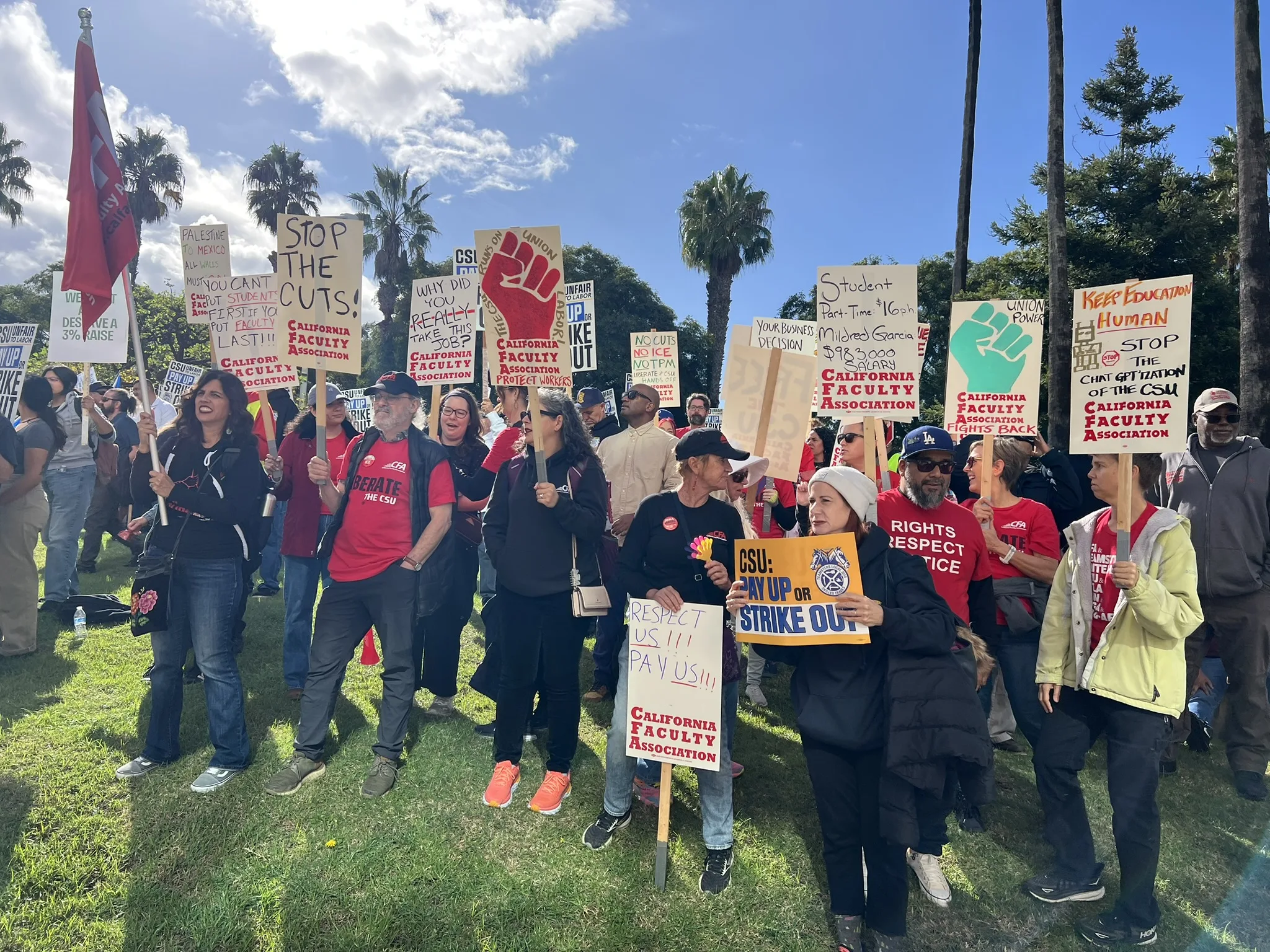
Chancellor Mildred García said approving the raises for vice chancellors would strengthen systemwide leadership capacity.
“Approval of the actions would also help mitigate leadership risks associated with leadership attrition, loss of institutional momentum, and disruption to system-wide priorities,” García said.
The raises range between 4% and 17% and bring the highest paid vice chancellor to an annual base salary of $466,400 and the lowest paid to $368,433. Three of the vice chancellors — Vlad Marinescu, Vice Chancellor and Chief Audit Officer, Junius Gonzales, Vice Chancellor for Academic Affairs, and Frank Hurtarte, Vice Chancellor for Human Resources — will also receive $61,244 in deferred compensation. Deferred compensation is an arrangement where an employee chooses to delay receiving part of their salary or bonus, and taxes on those earnings are typically deferred.
All four vice chancellors, including Greg Saks, Vice Chancellor of External Relations and Communications, are also eligible for 5% performance bonuses. These performance bonuses amount to between about $18,420 and $23,320 of spending money on top of their exorbitant salaries.
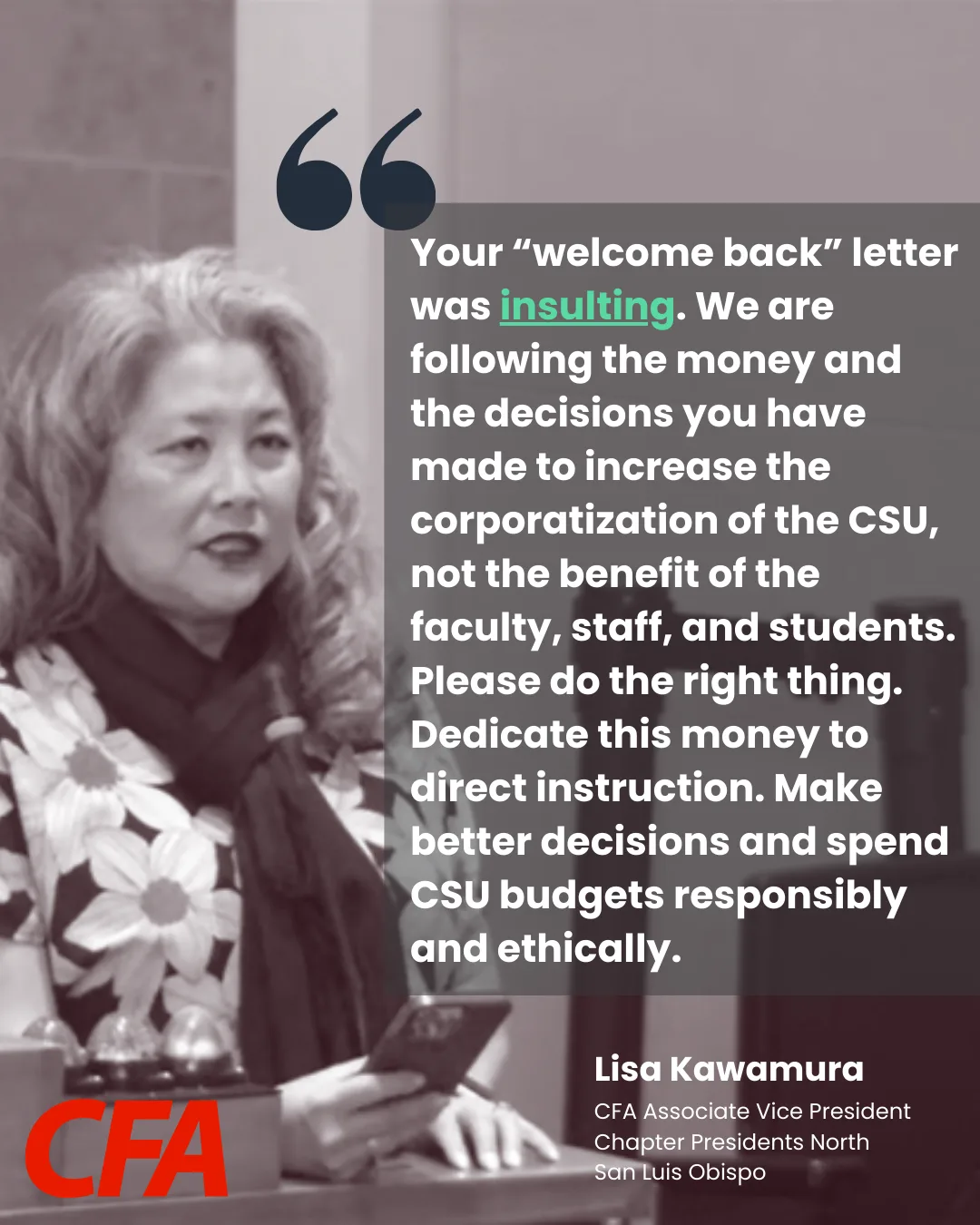
The board approved the raises about three weeks after Governor Gavin Newsom released his January budget proposal, which would allocate an additional $365.7 million in new, ongoing funding for the CSU. Lisa Kawamura, CFA Associate Vice President, North and Cal Poly San Luis Obispo lecturer, called on trustees to dedicate this money to instruction and spend the CSU budgets responsibly and ethically.
“Your offer to CSU employees, amounting to barely one month of groceries, in lieu of reinstating faculty and programs that you prematurely cut is ludicrous,” Kawamura said. “Disappointingly, you backed out on the negotiated raises and steps for our sister unions in exchange for outrageous raises for administrators.”
The sister unions Kawamura referenced include Teamsters Local 2010 members, who are going on strike from February 17 to 20. CFA president and Sacramento State professor Margarita Berta-Ávila also voiced solidarity with Teamsters during January’s board meeting.
“I want to share our solidarity with our union siblings, the Teamsters, and their fight to make sure that you keep your promises,” Berta-Ávila said.
Teamsters plans to hold an unfair labor practice strike statewide unless the CSU honors their contractual raises and salary steps. Teamsters members voted overwhelmingly to authorize a strike in December.
We are disappointed but not surprised that the CSU continues to claim it can’t afford promised raises for essential workers while giving vice chancellors and campus presidents pay hikes. The CSU must abide by their contract with Teamsters or risk a completely avoidable strike by 1,100 CSU skilled trade workers across the state.
Pilot tries to avoid investing in hiring investigators
While trustees didn’t hesitate to spend funding on executive pay, they discussed a new program designed to avoid investing in hiring more civil rights investigators. A civil rights investigator pool pilot program the Chancellor’s Office launched in October includes five campuses: Bakersfield, Chico, East Bay, Humboldt and Sacramento. Administrators said the program aims to reduce investigation timeframes and help senior investigators train and coach junior investigators.
Through the program, the Chancellor’s Office assigns an investigator from the pool to investigate a discrimination case. A senior investigator from the Chancellor’s Office partners with the assigned campus investigator to review progress, discuss next steps, and answer questions. For newer investigators, the Chancellor’s Office co-investigates with the campus investigator to provide mentorship.
Peter Lim, executive adviser for Civil Rights Programming and Services, said the CSU administration wants to increase the capacity of campus civil rights investigators.
“We think by coaching them and strengthening their skills, maybe right now they have a capacity ceiling of three or four investigations,” Lim said. “But with greater skills and greater training, maybe we can multiply that into five or six, thereby increasing our ability and capacity to do investigations without increasing the number of employees we need to hire in the CSU.”
CFA members know what it’s like for CSU administrators to expect employees to do more work. At the bargaining table, we proposed that the CSU complete all discrimination complaints within six months.
CFA is interested in making sure that the CSU complete discrimination complaints within six months and recently passed a bargaining proposal about just this. However, their plan sounds more like simply increasing the case load of current investigators. Given the importance of these investigations, they need to be completed both effectively AND thoroughly.
This is why we proposed the CSU hire outside counsel to help complete the work if a campus can’t meet a six-month deadline. We additionally proposed any campus with more than 20 active discrimination investigations hire outside counsel. For context on discrimination in the CSU, just last October, a former Cal State San Bernardino administrator won $6 million for a gender harassment case. Her attorneys claim that this kind of harassment is systemic across the Cal State system.
But management bargaining representatives rejected our proposal during the January 29 bargaining session. Moreover, they proposed to remove our right to grieve discrimination via the collective bargaining agreement altogether. These moves are concerning, especially when administrators just talked about a pilot program to reduce investigation timelines for discrimination cases.
CFA members will continue to hold administrators accountable and fight for what we deserve, both at Board of Trustees meetings and at the bargaining table.
Join California Faculty Association
Join thousands of instructional faculty, librarians, counselors, and coaches to protect academic freedom, faculty rights, safe workplaces, higher education, student learning, and fight for racial and social justice.