
At CSU Board of Trustees Meeting, Salary Study Omits Key Features and Draws Scrutiny
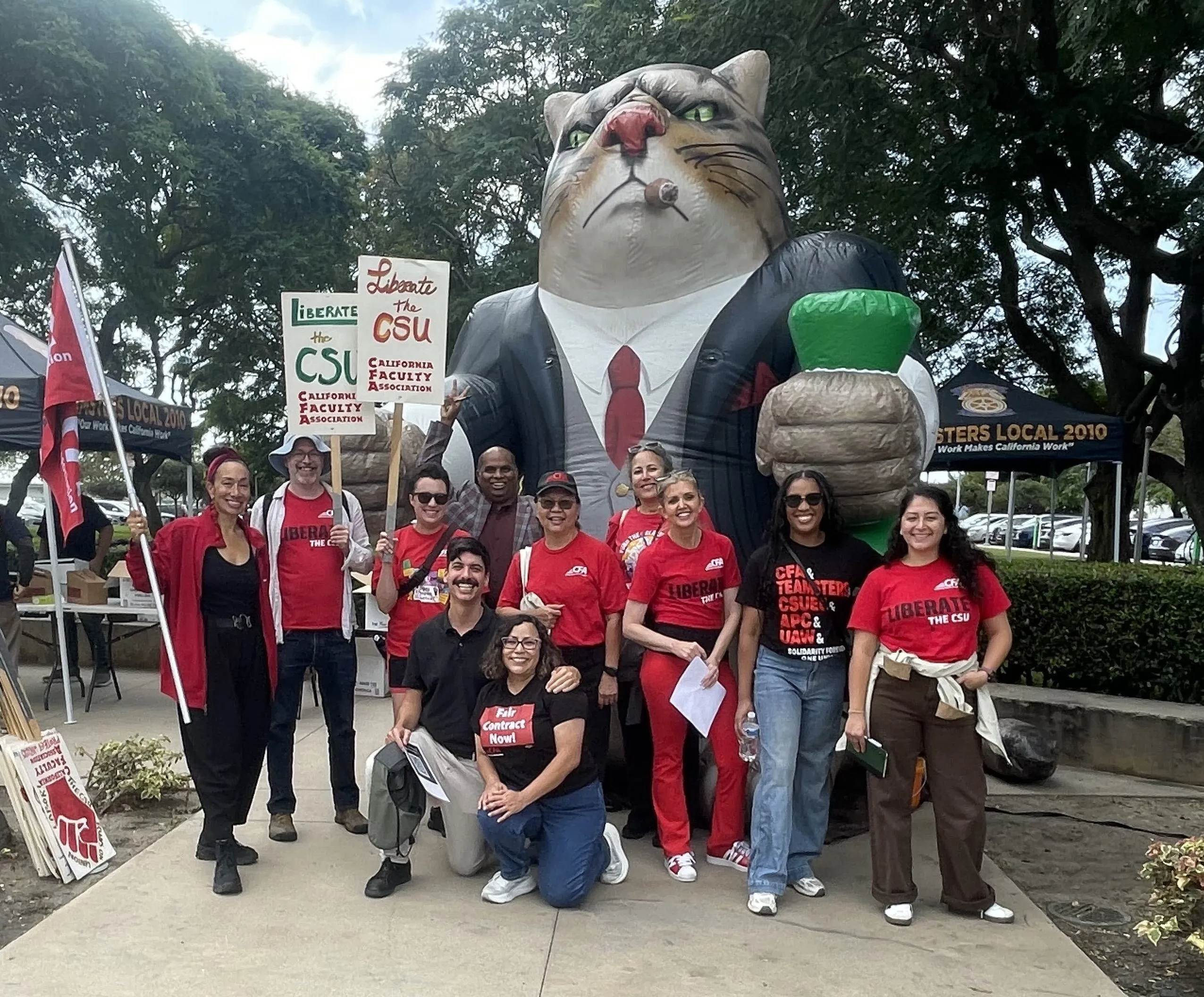
In August 2026, the Segal Group, a private consulting firm paid millions by CSU management, released a CSU employee salary study that attempted to erase evidence of the lived experiences of so many of our faculty. By cherry-picking facts and omitting important details, management’s clear goal for the study is for it to claim that our salaries are well within a “competitive range of the market median,” a competitive range designed to mislead and is entirely arbitrary.
During last week’s CSU Board of Trustees meeting, Jason Adwin, the Segal Group’s senior vice president, doubled down on the faculty and staff salary study. He reiterated that the majority of faculty salaries were well within their competitive market median range and that 95% of faculty were within this competitive range if we included benefits.
What Adwin failed to mention, even once, is that California has one of the highest overall costs of living in the United States. By choosing to only focus on the cost of labor across the entire country, the study paints a very incomplete and unrealistic picture of what it actually takes to make ends meet in our state.
Using cost of labor to compare salaries paints a clear picture – management only cares about how replaceable we are, not if we can survive. It is absurd to claim that our salaries are “competitive” or comparable to those across the country who face significantly lower costs for housing and other basic goods.
Another questionable and angering aspect of Adwin’s analysis is his decision to include benefits when assessing “competitiveness,” and to use our benefits to suggest that faculty compensation is more than fair.
Need we remind you that even a number of trustees were wary of this, with the board’s chair, Diego Arambula, remarking, “You can’t eat benefits.”
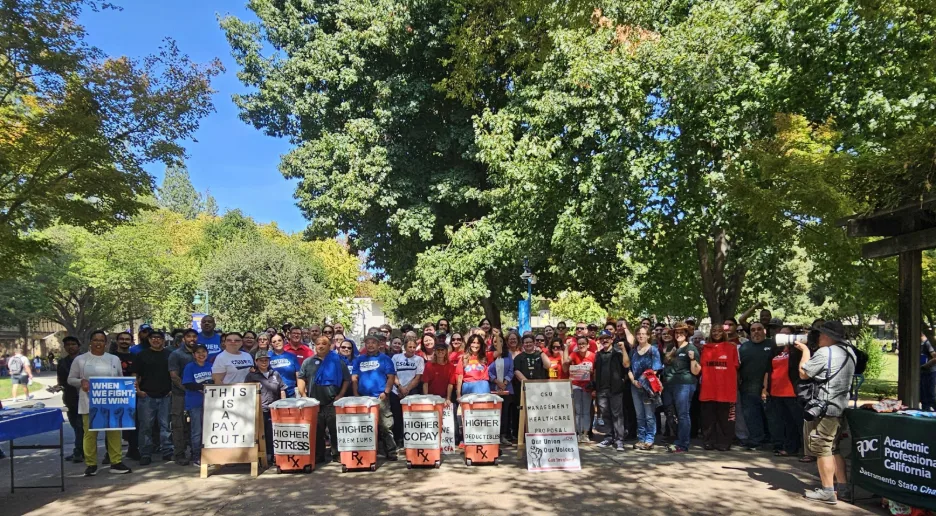
And he’s right. Benefits are very important for many of our faculty, but they don’t pay the rent, put groceries on the table, nor can they be used for childcare or to cover unexpected emergencies. Now, with the cost of gas and groceries increasing, we fear the impact of this study evaluating faculty salaries to be worse.
Segal included our benefits to our overall compensation to try and tweak the numbers to look more competitive, but many of our faculty do not receive any benefits from our employer.
In order to qualify for health benefits, a faculty member must work or teach a minimum of six Weighted Teaching Units (WTUs), or a 0.40 time base, for at least one semester. Yet, 37% of our lecturer faculty—who make up the majority of faculty within the CSU and on average take home $40,000 a year—do not meet this threshold. This means they are not eligible to receive any health benefits at all.
But many faculty choose to build their careers here and remain in the CSU because of the strong benefits package that we fought for and won. For the Segal Group and CSU management to use our benefits as justification for fair compensation is to conflate two very different things. Having strong healthcare does not override or eliminate the need for an adequate salary. It’s like telling someone that they shouldn’t require any more money for food because they have a really good physician.
Additionally, management is trying to have it both ways. On the one hand, they tell us that we are well-compensated for our work because of these health benefits, but then they turn around and try to increase our healthcare rates and, consequently, reduce our pay.
For someone like Chancellor García or other extremely well-paid CSU executives, the relative value of benefits is drastically different. When her base pay alone approaches $800,000, whatever additional benefits she or others like her receive is far less important to them than to the faculty who rely on benefits to cover medical expenses and provide a financial safety net. In García’s case, she receives an annual housing allowance of $96,000 and $80,000 in deferred compensation, whereas presidents either have their housing provided or receive an annual allowance of $60,000.
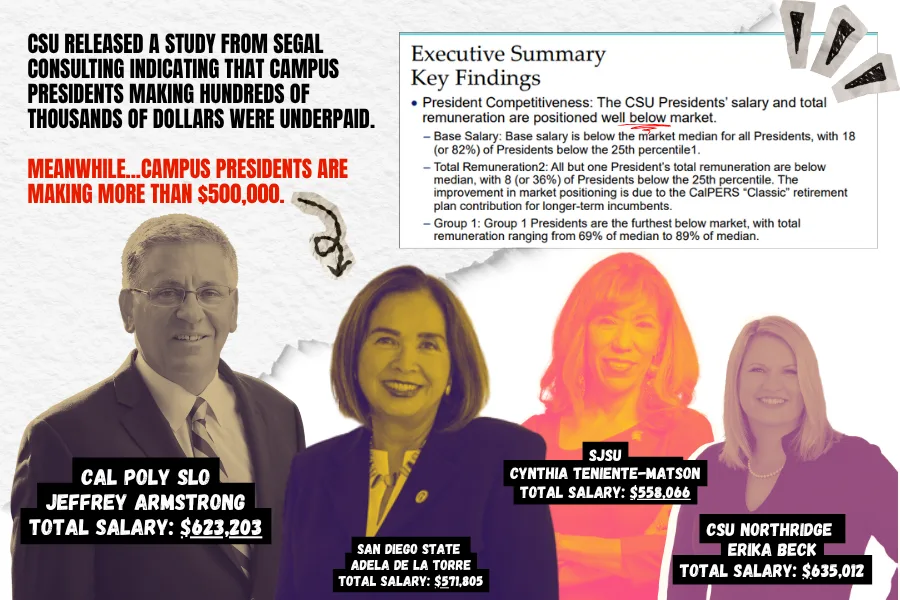
Also consider that Segal’s study indicated that campus presidents making hundreds of thousands of dollars were underpaid. Our hearts go out to Jeffrey Armstrong, president at Cal Poly San Luis Obispo, making more than $600,000.
CSU Interim Vice Chancellor for Human Resources Dave Grant even acknowledged that there is work that needs to be done since the study’s results only reflect averages and not every individual’s experiences. Trustee Leslie Gilbert-Lurie also raised concerns about salaries at the lowest levels.
“We want our employees to be able to live within a reasonable distance of where they work,” said Gilbert-Lurie. “We want them to be able to have food and we want them to be able to have housing. I want to be sure that our base salaries at the lowest levels align with what it means to live in California.” That’s right, Trustee Gilbert-Lurie, we agree: food and housing are basic life needs, and the current salary offer from CSU management does not meet our needs.
The day before Adwin’s presentation, union members gathered inside the Board of Trustees meeting during public comment. Part way through, they disrupted the meeting. Fed up with the chancellor’s apathy towards the CSU community and anti-union tactics, they began chanting, “No peace, no contract!” and forced the trustees to take a short recess.
As a coalition of union siblings, we are united in our demand for fair pay for all of us with no increase in the cost to our healthcare insurance. We will continue organizing for a fair contract, and we will hold the chancellor and trustees accountable for ensuring that our faculty and staff are treated with the respect we deserve.

We are asking faculty to share their experiences that show how absurd the compensation study is. You can participate by filling out this form here.
Join California Faculty Association
Join thousands of instructional faculty, librarians, counselors, and coaches to protect academic freedom, faculty rights, safe workplaces, higher education, student learning, and fight for racial and social justice.