
Nearly a Century Ago, San Diego County Residents Fought School Segregation. Here’s Why It’s Important Today.
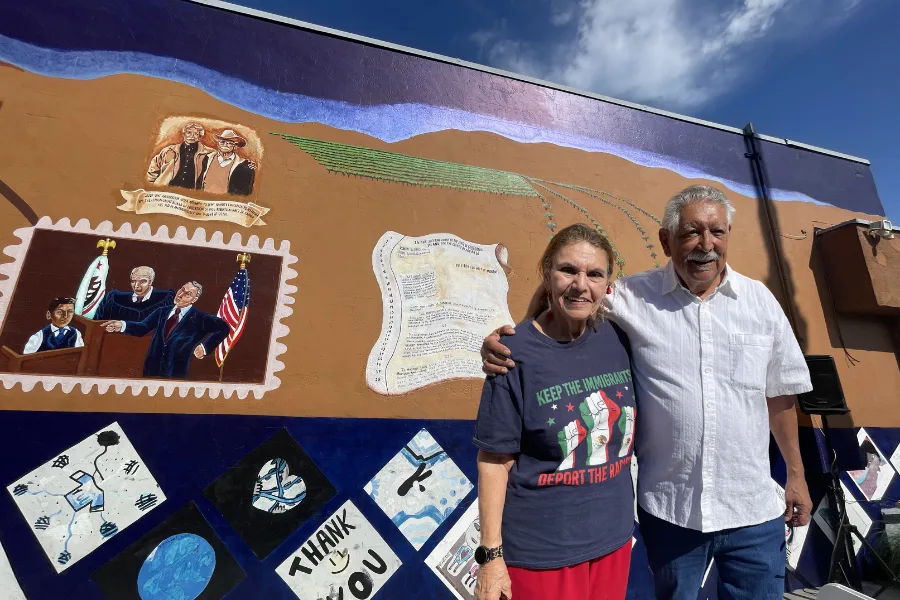
San Diego County community members last month marked the 95th anniversary of the first successful school desegregation court decision in the history of the United States.
Roberto Alvarez vs. the Board of Trustees of the Lemon Grove School District (1931) was a victory for Mexican American organizers in an anti-immigrant political climate similar to today’s. We can reflect on the Lemon Grove Incident as a reminder of our collective power against anti-immigrant actions in education.
“The Lemon Grove Incident is an achievement of the collective work of the Mexican community at a time when anti-immigrant and anti-Mexican sentiments were at their highest,” said Michelle Ramos Pellicia, CFA Vice President and CSU San Marcos professor. “Those ideologies never disappeared as people of color continue to be racialized and criminalized. The immigration enforcement in our communities is evidence of the struggle against these white supremacist institutionalized forces that believe we are less than deserving of quality education. Then as before, we do the collective work, and we continue to demand quality education.”
At the time, local, regional and national sentiment favored segregation as well as deportation of Mexicans, according to an article in the Journal of San Diego History. There were also national immigration policies aimed at reducing immigration from Mexican to the U.S. and California measures resulting from prejudices against the growing Mexican population.
In summer 1930, the Lemon Grove school board decided to build a separate school for children of Mexican heritage. The existing schoolhouse held 165 students in grades 1-8, and about 75 were Latino, according to the Lemon Grove Historical Society. The new separate school was one room with a shingle roof, two teachers, used books and desks, no playground equipment, and no school nurse.
The Mexican parents called the separate school “la caballeriza,” or the barnyard. In January 1931, the San Diego Evening Tribune published an article titled “75 Mexican students go on strike,” describing how the principal sent the children to the new Americanization school and how the community charged the school board with segregation.
They organized the Comite de Vecinos de Lemon Grove, the Lemon Grove Neighbors Committee, and got attorneys. They raised money for legal fees by asking for support in a Spanish language newspaper and holding barbeques and rummage sales. The case went to court in February. By late March, the judge had ruled that the school board couldn’t segregate the students.
“California law did not authorize or permit the maintenance of separate schools for the instruction of pupils of Mexican parentage, nationality and or descent,” according to the Journal of San Diego History article. “The children were legally entitled to enter the regular school building and receive instruction on the basis of equality with all other children.”
The children returned to school about a week later.
Now, 95 years later, CFA members are also organizing against attacks on immigration and education. Our Immigration Task Force has presented demands to ensure CSU campuses are free of deportation, harassment, intimidation, and unfair investigation. CFA members have also decried the federal government’s attacks on diversity, equity, and inclusion, including announcing cuts to grants for Hispanic-Serving Institutions.
We have also called on the CSU to comply with Senate Bill 98, also known as the Sending Alerts to Families in Education (SAFE) Act, which requires K-12 schools and higher education institutions to issue alerts if immigration enforcement authorities are present on campus.
“The CSU needs to implement SB 98 to ensure we work and study without the threats of immigration enforcement to our safety and health in our public university,” Ramos Pellicia said. “As the Lemon Grove Incident and later on, Mendez v. Westminster (1947) and Brown v. Board of Education (1954) have demonstrated, ‘Solo el pueblo, salva al pueblo.’ We will continue to fight against the racist attacks of this presidential administration by holding our CSU Chancellor, Board of Trustees, and administrators accountable on having access to learning and working conditions in a safe and healthy public university.”
Join California Faculty Association
Join thousands of instructional faculty, librarians, counselors, and coaches to protect academic freedom, faculty rights, safe workplaces, higher education, student learning, and fight for racial and social justice.