
Faculty Feature: No One Is Hopeless… Proof that It’s Never Too Late
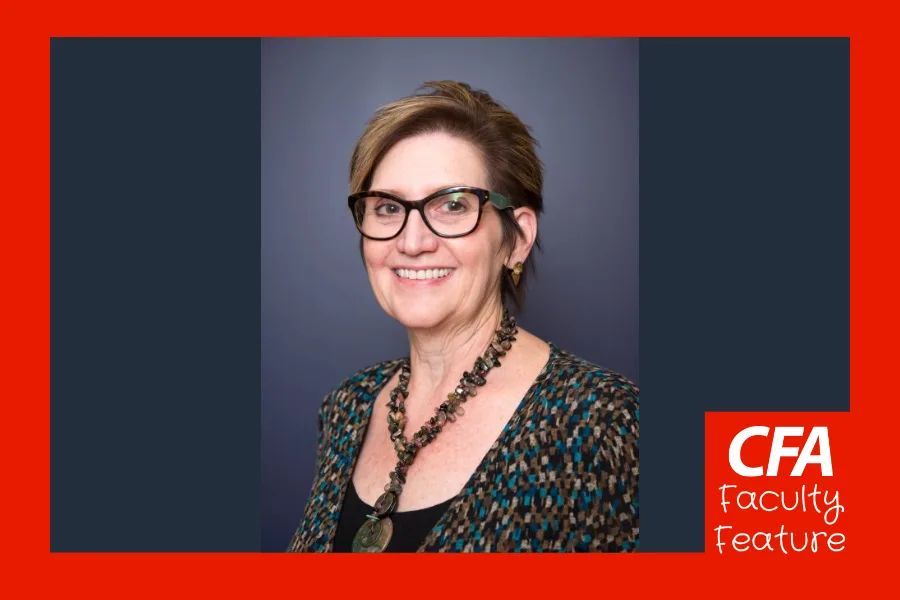
When Nancy Meyer-Adams walked into her classroom at the University of Southern California (USC) two decades ago, she overheard students groaning about the day’s topic: teen pregnancy. One of the students muttered there was little point in discussing teen moms since their futures were incredibly bleak.
Instead of proceeding with her planned lecture, Meyer-Adams shared a story. She described a 16-year-old musician checking into rehab just days before Christmas for drug and alcohol abuse. His parents—a mother employed as a waitress and bartender and also a high school dropout, and a father employed as a nurse—had him at 17, and his sister at 16.
Meyer-Adams then told them they all knew one person in the story, then asked them to imagine where that family might be today. While most students predicted a dismal future for the family, others guessed that the son had become a famous musician. The twist, however, was that the person they knew wasn’t the son, but the mother—Meyer-Adams herself.
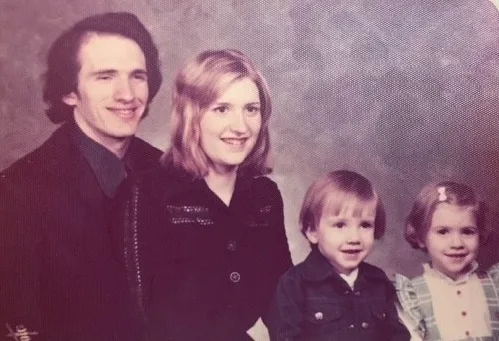
Today, Meyer-Adams leads the School of Social Work at CSU Long Beach (CSULB), while her son is a full professor of psychology at Colorado State University, and her daughter is a licensed clinical social worker and acupuncturist. Under her leadership, the School of Social Work has expanded to 60 faculty members, 650 graduate students (MSWs), 150 undergraduate students, and nearly a dozen staff members. 232 MSWs are graduating on May 19 and will be ready to join the California workforce.
“I tell this story because you never know the people that you will touch as social workers,” she explains to her students. “A lot of times, you only hear the bad… that these kinds of families fail. I don’t have to share my story with my students, but it’s important for them to listen to the people whom they will be working with as social workers, to understand their stories, where they come from, and what they are facing.”
Now concluding her final few months of her 12-year tenure as the school’s director, Meyer-Adams is eager to get back into the classroom.
“A lot has happened during this time,” she said. “COVID-19, the murder of George Floyd, the Trump administration, ICE raids and murders… so many things I would never have imagined myself having to lead through.” And while it has been a challenging learning experience for Meyer-Adams, she said that she has no regrets and has loved doing the work for over a decade.
Despite having significant academic responsibilities, Meyer-Adams stepped away in Fall 2025 when she learned her daughter was diagnosed with breast cancer. She spent that semester in Florida to be with her.
Meyer-Adams’ path to academia is atypical yet extraordinary. In 1971, she fell in love as a teenager in Indianapolis, became pregnant at age 16, and was forced to drop out of school. At that time, there were no programs for teen moms to continue their education.
By age 20, she was raising her two children as a single parent, working long hours in the restaurant business as a waitress, bartender, and eventually a manager. Things got more difficult when her son entered rehab. During this time, Meyer-Adams had her first encounter with social workers, who provided therapy for the family members and offered other means of support for her son. Unbeknownst to her, their meetings would have a profound influence on the trajectory of her and her children’s careers later on.
Realizing her job in the restaurant business was unsustainable, Meyer-Adams went back to school. She earned her GED at age 37 and then enrolled at a local community college. There, she met an instructor who encouraged her to push herself further academically. Meyer-Adams was accepted into the Honors Program and developed a strong interest in social work and social justice.
Scholarships helped pave the way for her bachelor’s and master’s degrees at Florida International University. There, she was mentored in ways she could not have imagined and by professors who saw something in her that she couldn’t. She also had a transformative experience while studying abroad in Spain.
One milestone after another, Meyer-Adams eventually found herself with a PhD from the University of Tennessee at the same time that her son received his PhD from UCLA. In just ten years, she went from a GED to a PhD.
“I was so inspired by my mentors—the people who saw something in me,” she said. “I would have never dreamed that I would get my GED, let alone go on to earn a PhD!”
Although she has not taught a course since 2014, her study abroad experience inspired her to develop a similar experience for social work students, including an undergraduate exchange program with the University of Hamburg – Applied Sciences (HAW).
“We were able to figure out how students could actually do their practicum in Hamburg despite a language barrier, as the social work students usually do not speak German,” she said. “And, since 2018, students have been able to work in refugee centers, services for the unhoused, and with other vulnerable populations while studying at HAW.”
She also created a shorter two-week summer study abroad course for graduate students in Berlin and Hamburg, where they focus on social justice and human rights. The summer of 2026 will be the fourth cohort in this program.
“We then sit and talk about their experiences,” Meyer-Adams said. “It’s these moments when I see them shift their perspective in powerful ways. There’s nothing better than this.”
Her advocacy goes beyond just her family and students. As a strong supporter of unions, she credits CFA with helping to improve the working conditions for all CSU faculty.
“Before this job at Long Beach State, I was never protected by a union,” she stated. “I never had medical insurance, pension, or any of the other benefits I currently have. I joined the day I walked onto the campus because I was so thrilled to be able to have that kind of support at my job. Unions help people, and it really shows.” She sees this at CSULB and with many of the clients her students work with outside the university.
Recognizing her own power as a CFA member, she pushed for better treatment and compensation for lecturers when she became the school’s director in 2014. She learned they were not receiving equitable pay and worked diligently to address concerns regarding salary compression and range elevation.
“Many times, lecturers carry the brunt of the work each semester in the classroom,” Meyer-Adams said. “It’s important they feel valued and feel good about coming to work.”
Her advocacy led to significant changes in lecturer working conditions and, throughout her tenure, she has continued to encourage more lecturer participation in the School of Social Work. Lecturers now hold positions on every committee within the school and can vote on curriculum and other items within the School of Social Work.
At the same time, Meyer-Adams also recognizes that union advocacy can mean compromises, and that not every fight will benefit her.
“Our members are doing exactly what they should be doing by going to their union representatives when needed,” she said. “Even when it doesn’t directly serve me, CFA members are ultimately out there fighting for all of us.”
For that reason, she is incredibly proud to be a CFA member.
“I feel great when I see other members here in the school. We all have CFA buttons, signs, and stickers on our doors. We walk the picket lines together and it just adds to the feeling of this being a great place to work. It’s great that I can collect a pension when I retire. That wouldn’t have even been a thought in my head twenty-five years ago. That’s because of our members and our Collective Bargaining Agreement.”
Looking back, one of her greatest achievements has been cultivating faculty that reflects the diversity of the students in the School of Social Work.
“It’s a dream come true for me and it makes me emotional,” she said, referring to the times students tell her that they see themselves in their faculty. We have such a rich mix of faculty in the kinds of ways that make us feel like we’re representative of what we say we’re supposed to be as social workers, and our students feel like they have faculty they can relate to. Knowing the importance of how mentors changed my life, I want to be sure our students can make connections to our faculty mentors”.
Meyer-Adams completes her role as director on August 14, just as she nears 72 years of age. She will spend the fall semester with her daughter to aid in her recovery from surgery before returning to teach in Spring 2027, where she will continue to share her personal story about teen pregnancy and dropping out of high school with incoming students.
“My son, my daughter and I, we made it out,” she exhaled. “It was a long haul with lots of bumps in the journey, but we did it… we beat the odds.”
Join California Faculty Association
Join thousands of instructional faculty, librarians, counselors, and coaches to protect academic freedom, faculty rights, safe workplaces, higher education, student learning, and fight for racial and social justice.